
Fuel monitoring on river vessels
How a river-transport company discovered its real fuel consumption was half the decades-old regulatory norm — and paid for the system on the first trip.
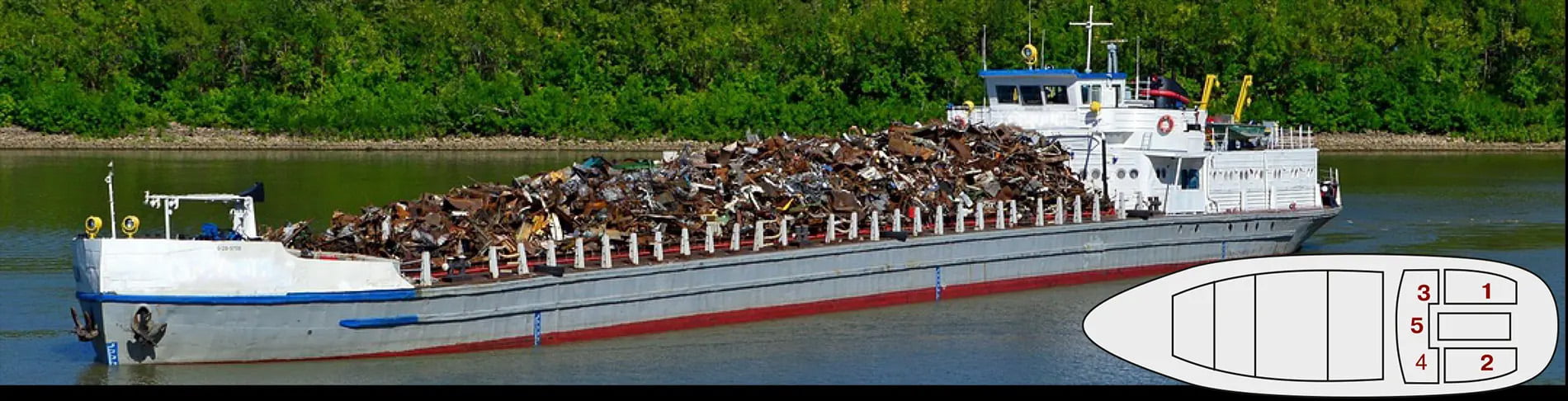
Dry-cargo vessels of Project 576
The company transports goods by river, operating dry-cargo vessels such as “Kriushi”, “Kozmodemiansk” and “Ochakov” across the Volga-Kama and Northern Dvina basins, as well as Ladoga and Onega lakes.
The vessels are “project 576” type: 94 m long, 2,000 t carrying capacity, 50 t fuel tanks and a crew of nine. Each vessel runs two main engines, a main and an auxiliary diesel generator, and a boiler.
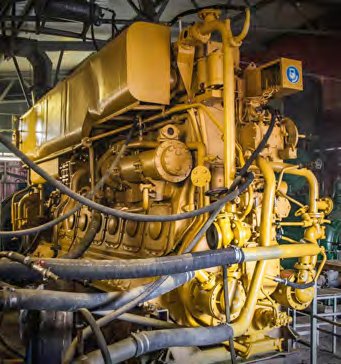
Decades-old fuel quotas, no real-time data
Fuel was accounted for by calculation — crews filled in trip statements against approved consumption quotas. Those quotas sat in regulatory documents several years out of date, and the fleet owner believed they were far too high.
The task was to implement a system providing accurate instant and total fuel consumption for each engine in real time. The “Kriushi” dry-cargo vessel was the first to be equipped.
DFM CAN flow meters on every diesel unit
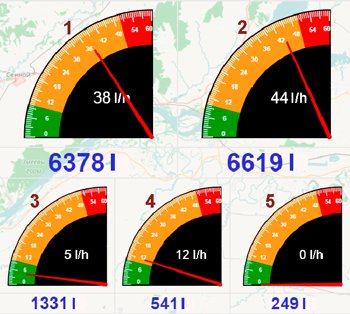
Five DFM flow meters with CAN J1939/S6 interface plus one Galileosky GPS unit, all running over S6 Technology. DFM 250CCAN meters sit in the main-engine fuel lines; DFM 100CCAN on the generators and boiler. Over CAN/S6 the tracker receives:
- instant fuel consumption of every engine
- total fuel consumption of every engine
- operating time of every engine
Data — plus fuel temperature and engine speed — streams to the dispatch service in real time and is visualised on the ORF4 telematics dashboard.
Average total consumption underway proved to be about 100 L/h — two times lower than the regulatory documentation stated. Fuel economy reached 61.50 USD per machine-hour (June 2017 prices), and the total cost of the system paid off twice during the vessel's very first trip.
Task → Solution → Result
Outdated fuel quotas, no real-time data
Fuel consumption was tracked using decades-old regulatory quotas. The fleet owner suspected they were far too high but had no way to verify.
DFM CAN flow meters with S6 Technology
5 DFM flow meters on each diesel unit (2 engines, 2 generators, 1 boiler) connected via CAN/S6 to a GPS tracking device.
2× lower consumption than documented
Real consumption proved to be half of the regulatory norm. The monitoring system paid for itself twice during the very first trip.
After installing the fuel monitoring system, we discovered that actual fuel consumption was two times lower than regulatory documentation stated. Total costs for purchasing and mounting the system paid off twice during the very first trip of the vessel.
Fleet management · River transportation company
Want product info and guidance from our experts?
Tell us about your fleet and we'll recommend the right measurement setup.